Dual Memory
Reassembling the Act of Remembering
2023
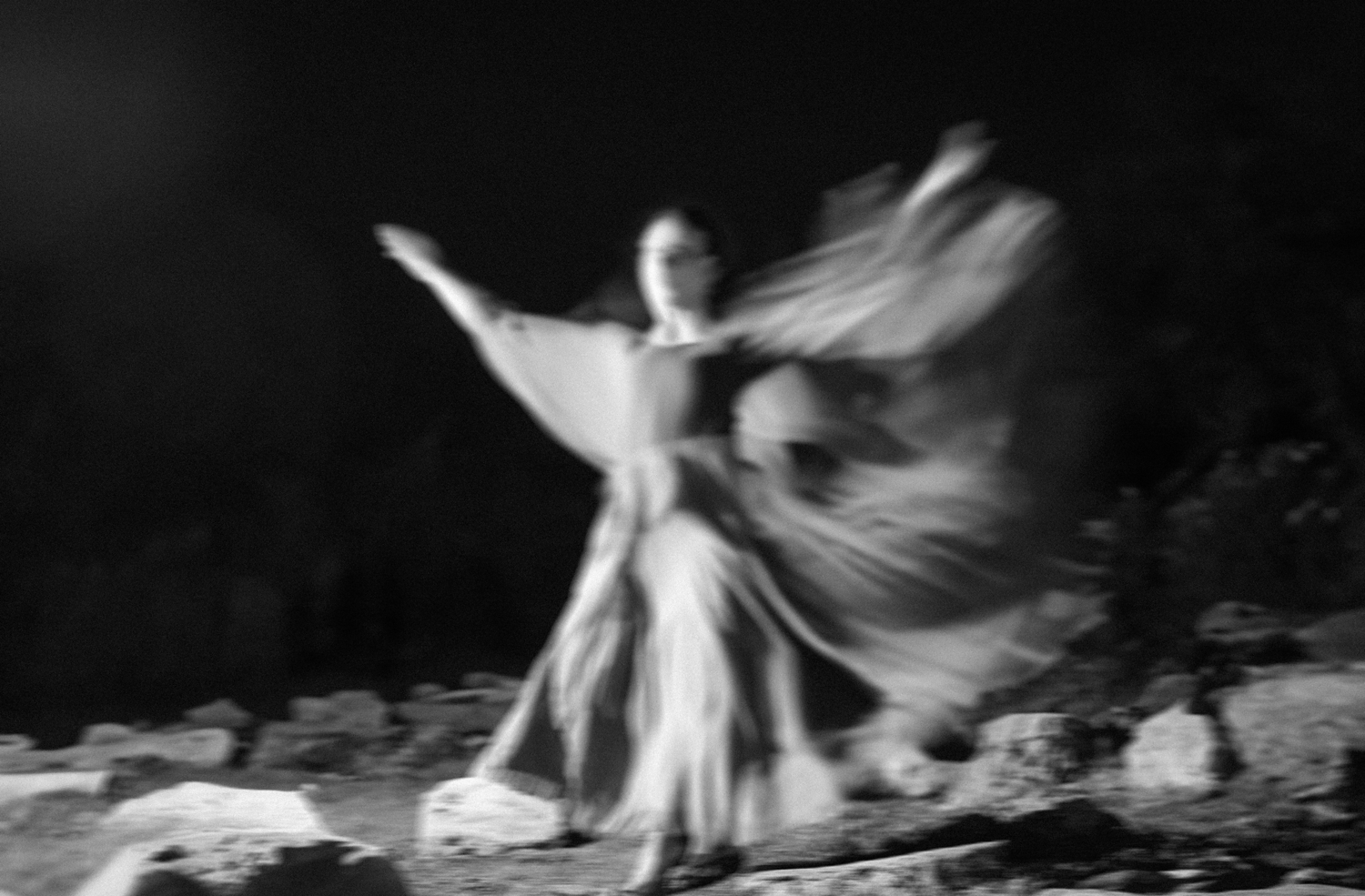
Dual Memory brings two visual registers into contact: blurred black-and-white images of a woman dancing and speculative diagrams drawing on the visual language of neuroscience — activation maps, electrophysiological signals, engram models and reconsolidation. The images differ in what they can show, but share a limit: neither makes a remembered experience directly available.
The dancer's movement may carry the effects of previous learning through rhythm, coordination and bodily skill. Yet the image cannot establish what she consciously remembers. It records an action in the present, not the history through which that movement was learned.
The diagrams approach memory through another form of mediation. Neuroscientific methods infer neural processes through measurement, processing and modelling. The images in Dual Memory draw on and transform this representational language. They are not recordings of the dancer's brain.
Neither side can stand for memory itself.
The work places bodily performance and scientific representation alongside one another without treating either as a complete account. One makes the effects of past learning visible through movement. The other offers models for processes that cannot be observed directly.
Research on memory updating and changing neural representations complicates the idea of memory as an unchanged record. Yet these findings do not resolve the distance between bodily action, scientific representation and lived recollection.
Dual Memory keeps that distance visible. What becomes accessible is shaped by the conditions through which memory is expressed, measured or represented.
Memory can remain continuous without remaining identical.