The Icon:
On Worship, Ice,
and the Limits of Reverence
This work draws on a personal memory: kneeling before gilded icons in an Old Believer church, surrounded by people whose faith was absolute: embodied, unexamined. Yet between the prayers, the sacred evaporated. Human nature returned: sharp glances, silent competition, gestures more suited to markets than sanctuaries. Reverence, it seemed, could be performed, but not necessarily embodied.
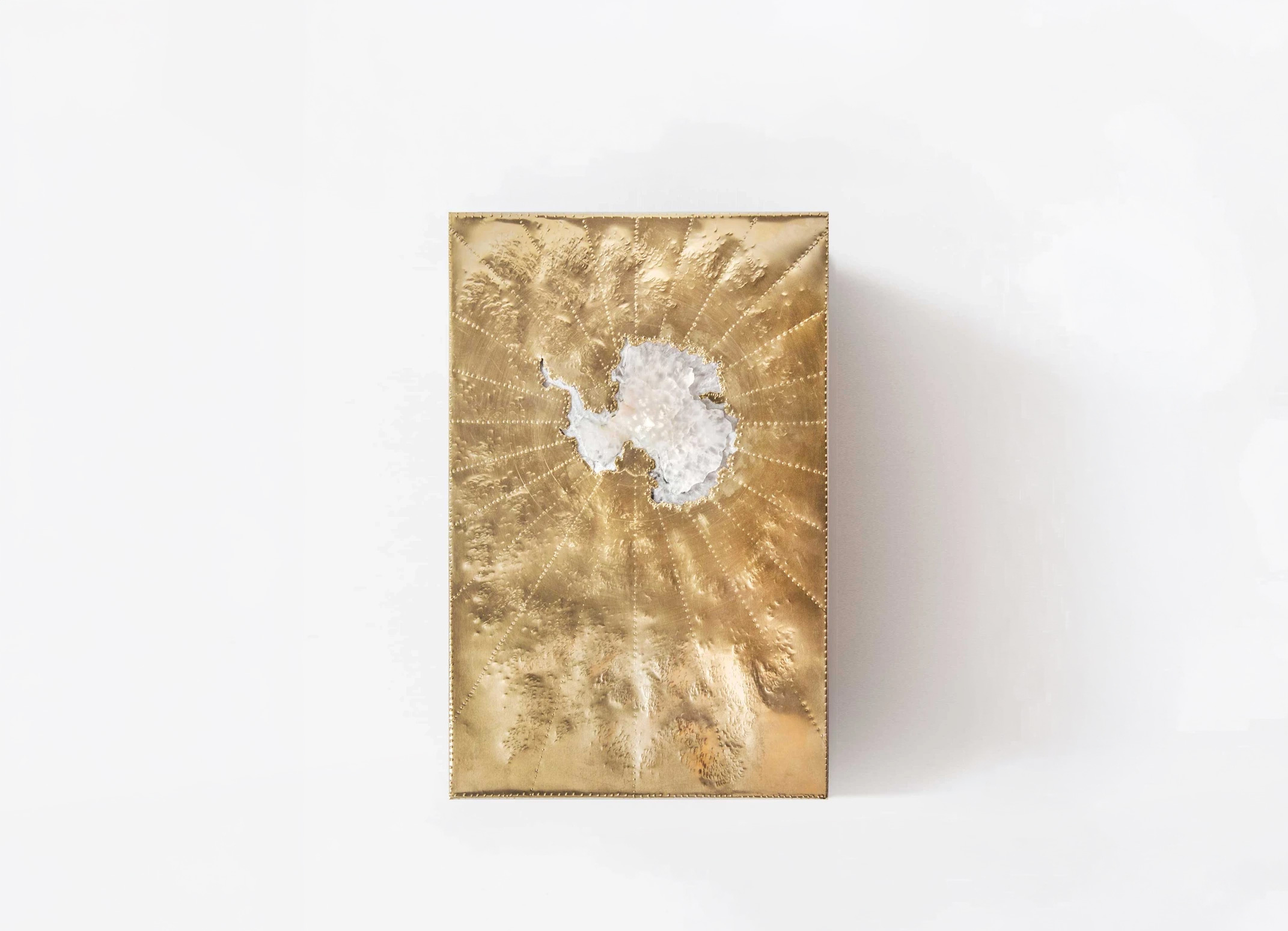
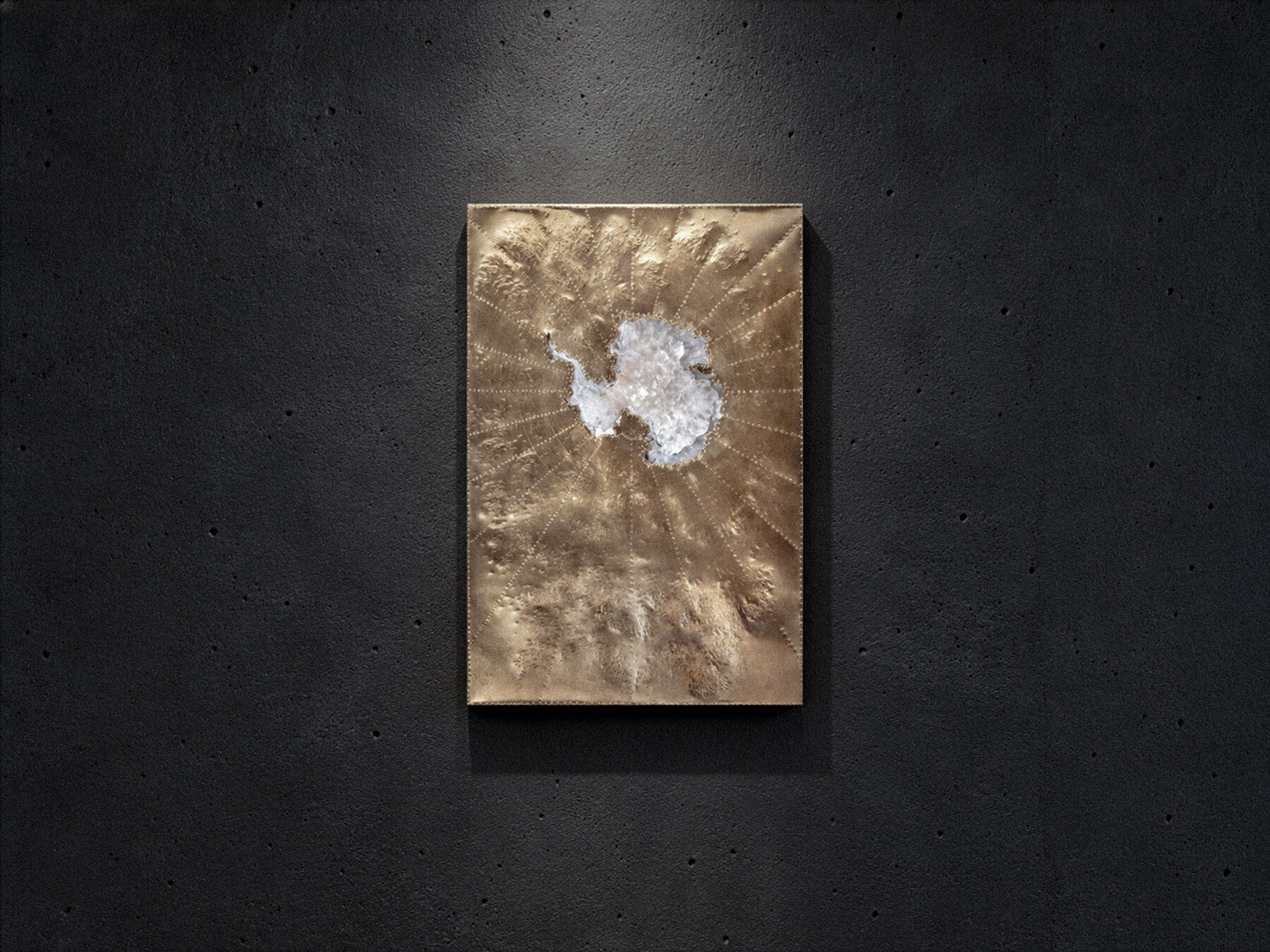
In The Icon, Antarctica takes the place of the sacred. Framed in gold, it is elevated, frozen in symbolic purity. Ice becomes the new altar; nature the new absolute. But this elevation is not neutral. In our search for meaning, we risk turning the Earth into an idol, not to care for it, but to perform our care in ways that reinforce moral hierarchies.
Green consumerism, dietary virtue, public ecological stances: they too can become rituals of distinction. But the Earth does not ask for worship. It asks for integration. Clean shampoo should not be a luxury. A biodegradable bag should not be a badge of identity. The planet does not require cults. It requires systems.
Antarctica holds the memory of the Earth, ice as a crystalline timekeeper. It resists us with indifference. To make it symbol is already to reduce it. Reverence, too, can be a form of control.
The Icon holds this paradox. It suspends the tension between devotion and domination, projection and presence. Can we care without spectacle? Can we relate without elevation? Can we protect without pretending to save?
The work honors ice not as sanctified matter, but as water in its most precise form: faceted, temporal, inhuman. Like the frozen moons of distant worlds, it reminds us that the Earth is older than us, and will outlast our convictions.
/ 2017